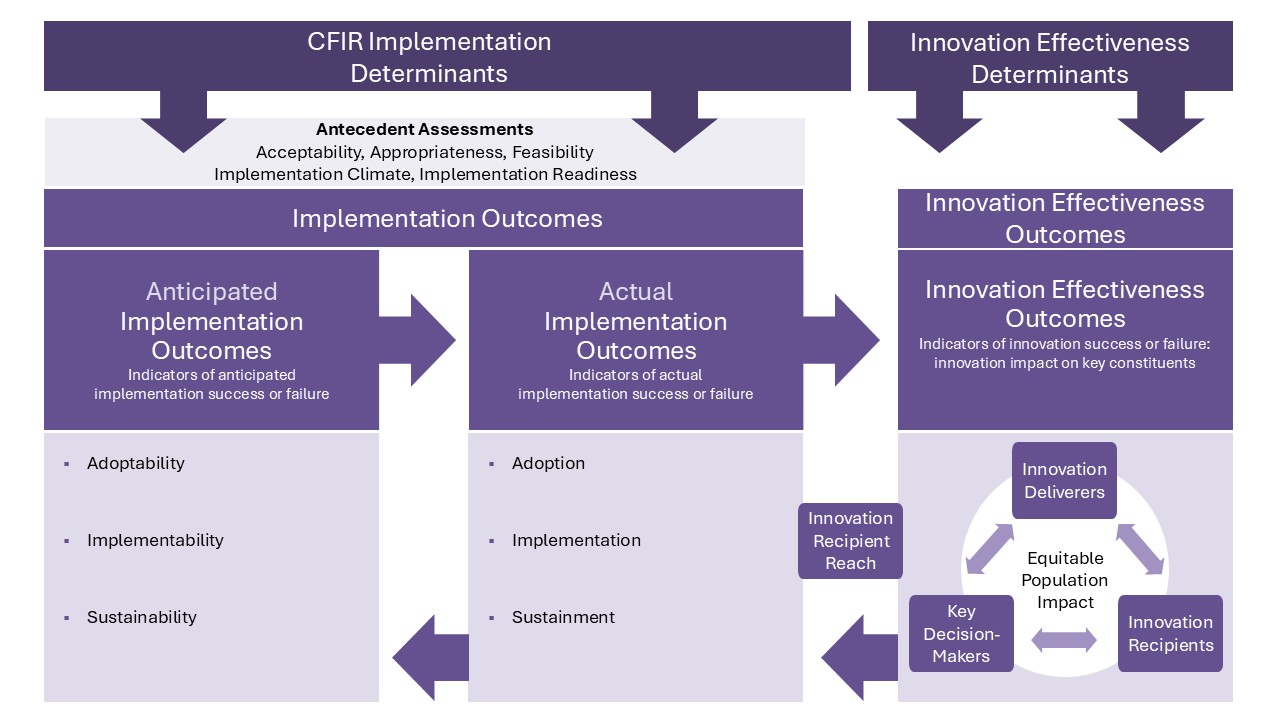
The CFIR outcomes addendum clarifies the scope and purpose of CFIR by making conceptual distinctions between: 1) Anticipated vs. actual implementation outcomes; 2) Implementation vs. reach vs. innovation effectiveness outcomes; and 3) CFIR-based implementation determinants vs. innovation effectiveness determinants.
The overarching goal of the addendum is to highlight that CFIR constructs influence organizational-level implementation outcomes – versus reach or innovation effectiveness outcomes.
Anticipated vs. Actual Implementation Outcomes
Implementation outcomes measure the extent to which the innovation is in place or being delivered as intended in the Inner Setting (e.g., organization). In other words, implementation outcomes measure the extent to which staff in the Inner Setting provide the innovation.
Anticipated implementation outcomes measure the likelihood of future implementation success or failure, e.g., Adoptability, implementability, sustainability
Actual implementation outcomes measure current or past implementation success or failure, e.g., Adoption, implementation, and sustainment
Anticipated and actual implementation outcomes are influenced by constructs in CFIR.
Implementation vs. Reach vs. Innovation Effectiveness Outcomes
Implementation outcomes measure the extent to which the innovation is in place or being delivered as intended in the Inner Setting (e.g., organization). In other words, implementation outcomes measure the extent to which staff in the Inner Setting provide the innovation.
Implementation outcomes are influenced by constructs in CFIR.
Reach measures "the absolute number, proportion, and representativeness of [recipients] who are willing to participate in a given initiative, intervention, or program” (Glasgow et al. 2019). In other words, reach outcomes measure the extent to which recipients receive or participate in the innovation.
Reach is influenced by implementation effectiveness, i.e., reach is unlikely to occur without effective implementation, but it is also influenced by recipient-level characteristics, perceptions, and choices.
Innovation effectiveness outcomes measure the degree of success or failure of the innovation and include innovation impact on 1) innovation recipients (e.g., patients), 2) innovation deliverers (e.g., clinical providers), and 3) key decision-makers/the system (e.g., hospital leadership).
Innovation effectiveness outcomes are not influenced by constructs in CFIR.
Note: We conceptualize Reach as distinct from Implementation Outcomes in alignment with RE-AIM developers and the RE-AIM Outcomes Cascade. In this conceptualization, Reach proceeds implementation (innovation agent fidelity to the various elements of an innovation’s protocol, including consistency of delivery) and precedes innovation effectiveness (the impact of an innovation on important outcomes) (Jolles et al. 2024, Glasgow et al. 2019). We recognize that Reach is often conceptualized as an implementation outcome given the diverse types of innovations and contexts being studied in implementation science. In many instances, Reach is used as a proxy for the initiation of implementation.
CFIR-based Implementation Determinants vs. Innovation Effectiveness Determinants
CFIR-based implementation determinants are InnerSetting-level barriers and facilitators that predict or explain implementation outcomes.
Data is best collected from individuals who have influence and/or power related to implementation in the Inner Setting (e.g., implementation leads, innovation deliverers, and key decision-makers) – and this rarely includes innovation recipients.
Innovation effectiveness determinants are recipient-level characteristics and perceptions of the innovation that predict or explain innovation effectiveness outcomes (e.g., patient outcomes).
Data is best collected from innovation recipients.
CFIR constructs represent implementation determinants – not innovation effectiveness determinants.
Note: Implementation effectiveness and innovation effectiveness influence reach; in order to reach recipients, you need both effective implementation and an effective innovation.
We use cookies and similar technologies to help personalize content and provide a better experience. By clicking OK or turning an option on in Cookie Preferences, you agree to this, as outlined in our privacy policy.
Cookies are small text that can be used by websites to make the user experience more efficient. The law states that we may store cookies on your device if they are strictly necessaryfor the operation of this site. For all other types of cookies, we need your permission. This site uses various types of cookies. Some cookies are placed by third party services that appear on our pages.
Thank you! Your submission has been received!
Oops! Something went wrong while submitting the form.